
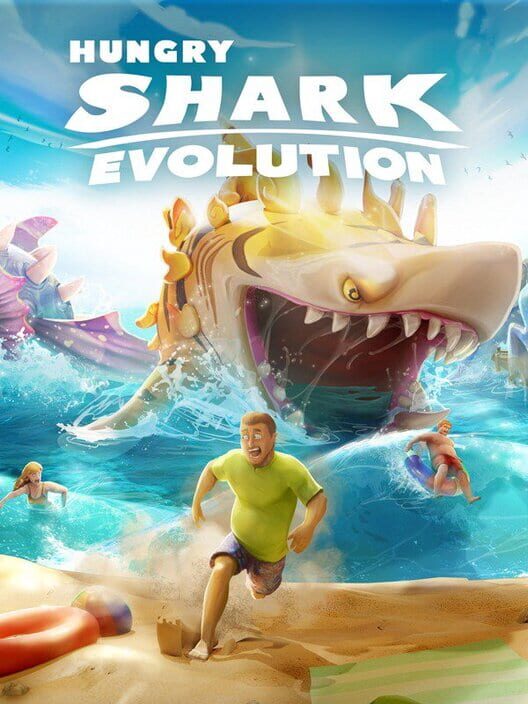
Hungry Shark Evolution
Game, 2012
Sharkuracy index
19out of 100
Insharkurate
Community grade, 1 rating
- Shark role
- Central to the work
- Audience
- General audience
Sign in or create an account to leave your own rating!
Index breakdown
- Scientific Accuracy
Distorted
What this means for Scientific Accuracy
Several clear errors or myths, in either direction, with few accurate elements. Exaggerated: a drop of blood sets off a frenzy, a shark roars. Understated or simply wrong: sharks shown as toothless or harmless by nature, able to live without eating animals, or "sharks don't get cancer".
- Motives & Risk
Distorted
What this means for Motives & Risk
Clear distortion of motive or risk dominates. Demonising: encounters framed as attacks, with ominous music, gore, titles or posters, and no sign that bites are rare or have causes. Sanitising: sharks shown as people's devoted friends, guardians or pets, as friends who give up eating, as safe to grab, ride or hug, or the risk to people denied.
- Ecological Context
Distorted
What this means for Ecological Context
Habitat, range or prey clearly wrong for the species or place (a great white in a freshwater lake; bull sharks, though, really do enter rivers and lakes), or sharks emptying an area of fish.
- Human Impact & Conservation
Grossly distorted
What this means for Human Impact & Conservation
The picture of human impact is false at its core, either way. Killing or harming sharks is shown as harmless, heroic, fun or the fix for bites (celebrated hunts, culls, trophy kills), or sharks are said to need no protection. Or the reverse: the work's case rests on invented or grossly false figures about the threats.
Expert ratings
Verified experts’ ratings of Hungry Shark Evolution, newest first.

19 out of 100, Insharkurate
Rated 24 October 2026
See Catarina Abril’s ratingHide Catarina Abril’s rating
- Scientific Accuracy
Distorted
What this means for Scientific Accuracy
Several clear errors or myths, in either direction, with few accurate elements. Exaggerated: a drop of blood sets off a frenzy, a shark roars. Understated or simply wrong: sharks shown as toothless or harmless by nature, able to live without eating animals, or "sharks don't get cancer".
Why this level
Some species are well portrayed - there is a reef shark, a mako, an hammerhead, a great white. But then there are robot sharks and “godzilla-esque” sharks. Sharks eating bigger sharks then them and frozen food or funny items.
- Motives & Risk
Distorted
What this means for Motives & Risk
Clear distortion of motive or risk dominates. Demonising: encounters framed as attacks, with ominous music, gore, titles or posters, and no sign that bites are rare or have causes. Sanitising: sharks shown as people's devoted friends, guardians or pets, as friends who give up eating, as safe to grab, ride or hug, or the risk to people denied.
Why this level
It has a strong element of the maneater narrative but the purpose being the game is to feed the shark with multiple items among which there are humans, frozen food, bombs.
- Ecological Context
Distorted
What this means for Ecological Context
Habitat, range or prey clearly wrong for the species or place (a great white in a freshwater lake; bull sharks, though, really do enter rivers and lakes), or sharks emptying an area of fish.
Why this level
A lot of innacuracies but some interesting dynamics such as the shark avoiding lionfish because it is venomous, and being stinged by swordfish which does happen in the wild.
- Human Impact & Conservation
Grossly distorted
What this means for Human Impact & Conservation
The picture of human impact is false at its core, either way. Killing or harming sharks is shown as harmless, heroic, fun or the fix for bites (celebrated hunts, culls, trophy kills), or sharks are said to need no protection. Or the reverse: the work's case rests on invented or grossly false figures about the threats.
Why this level
It purely paints sharks as eating machines including human eating machines. No conservation value whatsoever
About this game
Control a variety of sharks as they travel the ocean. You have to eat to stay alive, but there are hazards everywhere which will stop you in your tracks.
- Genre
- Action
- Game category
- Arcade
- Language
- English
Ratings from other sites
How critics and players on other sites rated this game. These ratings have no influence on the Sharkuracy index.
- IGDB players
- 70 out of 100
- Average of 34 IGDB users’ ratings
- IMDb
- 8.2 out of 10
- Average of 5 IMDb users’ ratings
From IGDB.com (opens in a new tab), and IMDb via OMDb (opens in a new tab), as of .